
Candela GentleMax Pro Plus vs. IPL Hair Removal - Which Is Safer, Faster, and More Effective?
Hair removal choices can feel like a beauty menu written by a physics professor. One option says “laser,” another says “IPL,” and suddenly a smooth-leg appointment has turned into a light spectrum pop quiz. Cute.
The good news: the difference is easier to understand than it sounds. Both options use light to reduce unwanted hair, but they do it in very different ways. One is more targeted. One is broader. One is generally better suited for longer-lasting results in a clinical setting. The other can be useful, but often needs more patience, more sessions, and more realistic expectations.
This guide compares Candela GentleMax Pro Plus with IPL hair removal across technology, effectiveness, comfort, speed, and safety, so choosing a treatment feels less like guesswork and more like a smart skincare decision.
Terms like laser hair removal, laser, IPL, hair reduction get tossed around a lot, but they are not interchangeable. That tiny distinction matters, especially when skin safety and results are involved.

The technology is not the same, even if both use light
The biggest difference between laser and IPL comes down to the kind of light each device delivers.
A laser uses a specific wavelength of light. That light is focused, controlled, and designed to target melanin, the pigment in the hair. When the hair absorbs that energy, heat travels down to the follicle. With repeated treatments, this can reduce the follicle’s ability to grow hair.
IPL stands for intense pulsed light. It is not a true laser. IPL uses a broad range of light wavelengths, usually filtered to target hair pigment. Because the energy spreads across several wavelengths, it is less focused than a laser.
Think of it this way:
Candela GentleMax Pro Plus | IPL hair removal |
Uses focused laser wavelengths | Uses broad-spectrum pulsed light |
Targets pigment with greater precision | Covers a wider range of light energy |
Typically used in professional clinics | Available in professional and at-home formats |
Often better for predictable hair reduction | Often more variable from person to person |
The Candela system is known for combining two laser wavelength options commonly used in professional hair removal: one often chosen for lighter skin types and one often chosen for deeper skin tones. That gives trained providers more flexibility when treating different skin and hair combinations.
IPL, by contrast, tends to work best when there is strong contrast between skin and hair, such as lighter skin with darker hair. It may be less consistent on deeper skin tones because broader light energy can interact more with surrounding skin pigment. That does not mean IPL is “bad.” It means it has a narrower comfort zone, scientifically speaking. A little picky, honestly.
Effectiveness depends on precision, settings, and hair biology
Hair removal is not a one-and-done situation with either method. Hair grows in cycles, and light-based treatments work best when hair is in the active growth phase. Since not every hair is in that phase at the same time, a series of sessions is needed.
That part applies to both laser and IPL. The difference is what happens during those sessions.
Professional laser systems deliver energy in a more focused way. With the right settings and an experienced provider, that focused energy can reach the follicle efficiently. This is one reason clinical laser treatments are often chosen for coarse, dark hair on areas like:
Underarms
Bikini line
Legs
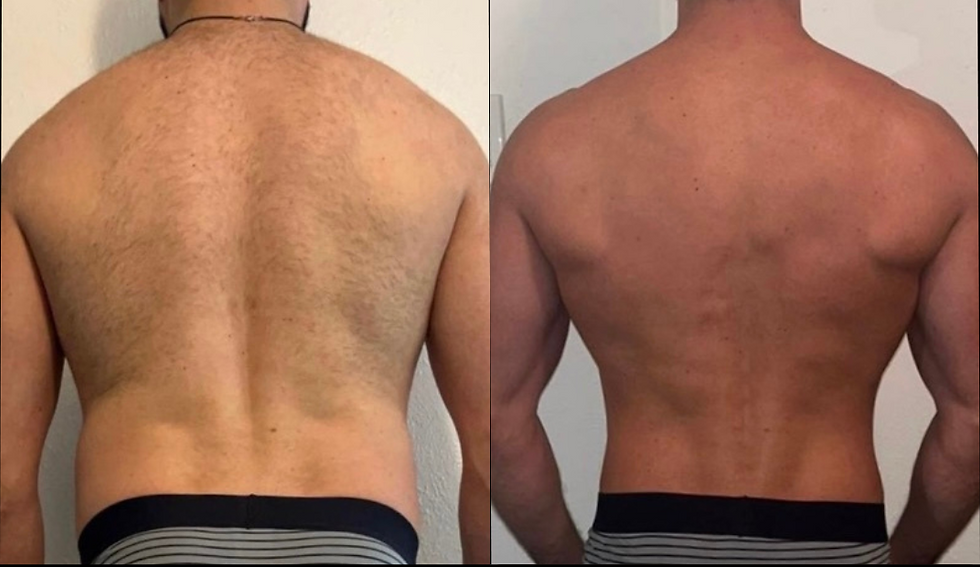
Back
Chest
Face, when appropriate for the hair type
IPL can also reduce hair growth, especially for people with dark hair and lighter skin. The tradeoff is that results may take longer, and some people need more maintenance. Because IPL energy is less concentrated, it may not disable follicles as efficiently in every case.
Here is the part nobody loves but everyone needs to know: no light-based hair removal works well on hair with very little pigment. Blonde, white, gray, and some red hairs are harder to treat because there is not enough melanin to absorb the light. The device can be fancy, the room can be spotless, the playlist can be amazing, but physics will still be physics.
Dermatology and aesthetic laser professionals generally favor true laser systems when the goal is more controlled, efficient, long-term hair reduction, especially when settings can be adjusted for skin tone, hair color, and treatment area.
That expert view is rooted in how the devices work. More targeted energy can mean more predictable delivery to the follicle, as long as the treatment is done correctly.

Speed is where the laser gets a little sassy
Treatment speed matters. Nobody wants to spend an entire afternoon lying very still while tiny flashes of light play connect-the-dots on their legs.
Candela’s professional laser platform is designed for efficient treatments, especially on larger areas. Bigger treatment areas benefit from larger spot sizes and faster pulse delivery, depending on the settings chosen by the provider. In plain English, more skin can be treated in less time compared with smaller or lower-powered devices.
That can make a real difference for areas like legs, back, chest, and arms. Smaller areas, such as the upper lip or underarms, are already quick, but efficient technology still helps keep appointments neat and manageable.
IPL treatment times vary widely. Professional IPL may be faster than small at-home IPL devices, but the broad light delivery and energy limits can affect the number of passes or sessions needed. At-home IPL devices are usually designed with lower energy for consumer safety, which can mean slower progress.
A common patient reaction after switching from IPL-style treatments to professional laser is something like:
“I expected it to feel more intense because it was a laser, but the appointment was faster than I thought. The cooldown made it much easier than the old treatments I tried.”
That is a composite of typical feedback clinics hear, not a promise that every session feels the same. Sensation varies based on treatment area, hair density, skin tone, timing, and personal pain tolerance. The bikini line and upper lip, for example, enjoy being dramatic.
Still, faster coverage plus integrated cooling often makes the experience more comfortable than people expect.
Comfort and safety are about control, not just power
People often assume stronger means scarier. With light-based hair removal, the safer treatment is not simply the one with less energy. It is the one with the right energy, delivered in the right way, by the right person.
A professional laser system offers more precise settings. Providers can adjust treatment based on:
Skin tone
Hair color and thickness
Treatment area
Recent sun exposure
Skin sensitivity
Medical history and medications
That control matters. Too little energy may do almost nothing. Too much energy, or the wrong setting, can raise the risk of burns, blisters, irritation, or pigment changes.
IPL can be safe when used correctly, but broad-spectrum light is less selective. Because it sends out multiple wavelengths, there is more potential for surrounding skin to absorb some of that energy. That matters especially for darker skin tones or recently tanned skin.
Professional evaluation is key for both options. A good provider will ask about tanning, pregnancy, medications, topical products, skin conditions, and past reactions. They should also provide protective eyewear. If they skip the safety questions and go straight to zapping, that is not cute. That is a red flag wearing lip gloss.
This article is educational only and does not replace advice from a licensed medical or aesthetic professional.
IPL still has a place, but it is usually not the powerhouse
IPL is not useless. It can be a reasonable choice for some people, especially those looking for gradual reduction and maintenance. It may appeal to people who prefer a lower-intensity option or want to manage small areas at home.
The tradeoffs deserve honesty.
IPL may require more sessions, more touch-ups, and more consistency. Results can be less dramatic, particularly for coarse hair or areas with dense growth. At-home IPL also requires careful use. Skipping instructions, treating tanned skin, or going over the same area too aggressively can irritate skin.
Professional laser treatments usually cost more per session than at-home IPL tools or some light-based services. But the value question is not only about price per appointment. It is about how many sessions are needed, how strong the results are, how much maintenance is required, and how safely the device can be adjusted to the person being treated.
If the goal is occasional softening, IPL may make sense. If the goal is more noticeable, long-term reduction with professional oversight, laser tends to have the advantage.
The best candidate is not one-size-fits-all
The best option depends on the hair and skin combination. Dark, coarse hair usually responds best because it has more melanin for the light to target. Fine or light hair may respond poorly no matter which device is used.
A professional consultation should include a skin type assessment and a look at the treatment area. The provider may also recommend avoiding sun exposure before and after sessions. Freshly tanned skin can raise the risk of irritation and pigment changes.
Here is a simple way to compare likely fit:
If this describes the goal | The stronger match is often |
Fast treatment for larger body areas | Professional laser |
More controlled settings for varied skin tones | Professional laser |
Gradual maintenance at home | IPL |
Dense, coarse, dark hair | Professional laser |
Very light, gray, white, or red hair | Neither may work well |
Recently tanned skin | Wait and get professional guidance |
The sassy truth: hair removal is part technology, part biology, and part calendar discipline. Skipping sessions can slow progress because timing matters. A great device still needs a good treatment plan.
What professionals look for before choosing settings
Experienced providers do not simply pick a setting and hope for smoothness. They look for visual and practical clues.
They may evaluate hair thickness, hair color, skin tone, previous reactions, and the area being treated. They also pay attention to endpoints during treatment, such as mild redness around follicles. That can suggest the follicle absorbed heat, but the reaction should stay within a safe range.
A laser specialist might explain the choice this way:
“The best treatment is not the highest setting. It is the setting that safely gets enough heat to the follicle while protecting the surrounding skin.”
That is the heart of the laser-versus-IPL conversation. The device matters, but the person operating it matters too. A powerful system in careless hands is not better. A careful provider with a precise device is the dream team.

The takeaway is simple and smooth
Candela GentleMax Pro Plus and IPL both use light to reduce hair, but they are not equal tools. IPL uses broad-spectrum light, which can be helpful for some people but often delivers more variable results. A professional laser system uses focused wavelengths, giving trained providers better control, stronger targeting, and often faster treatment times.
For people who want efficient, longer-lasting hair reduction, especially on larger areas or coarse dark hair, professional laser treatment usually has the edge. IPL can still have a role for maintenance or gradual reduction, but expectations need to be realistic.
The safest, smartest move is a consultation with a qualified provider who can assess skin tone, hair type, sun exposure, and treatment history. Smooth skin is lovely. Smooth skin with a safe plan is even better.


Comments